
How to Turn a 12m Shipping Container into a High-Security Remote Warehouse
Introduction
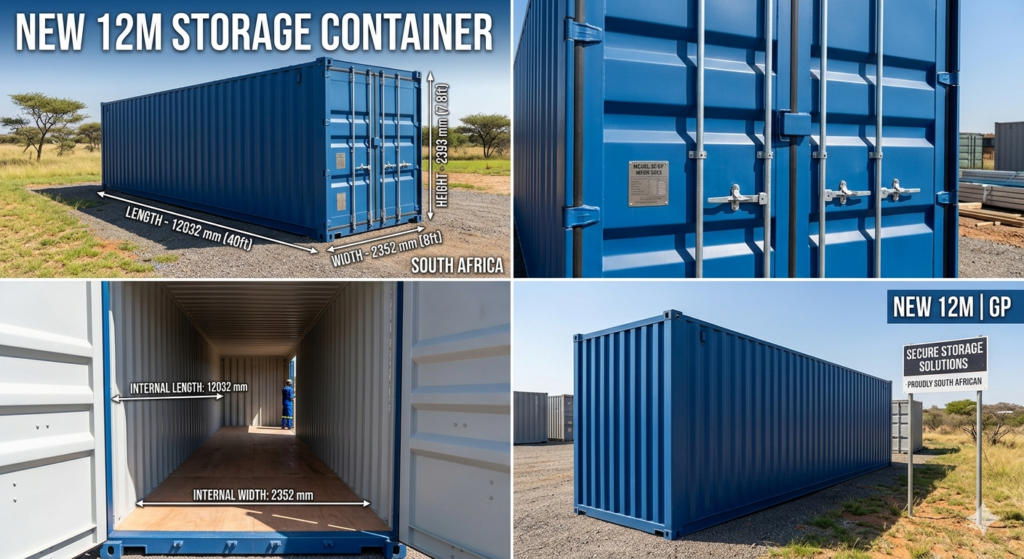
As South African businesses expand operations into more remote and less monitored locations, the need for secure, flexible, and cost-effective storage solutions has never been greater. The 12m (40ft/12032mm) shipping container is not only cost-effective per square meter but, when properly upgraded, can be transformed into a high-security remote warehouse capable of withstanding theft, vandalism, and harsh environmental conditions. This comprehensive guide details the essential steps and best practices—focusing on lock boxes, specialized signage, and anti-vandal features—to maximize security, ensure operational success, and optimize your investment.
1. Why Choose a 12m Shipping Container for Remote Warehousing?
1.1. Size and Versatility
- Large internal volume: 67m³ and over 28m² of floor space.
- Modular and relocatable: Easy to move as business needs change.
- Structural strength: Designed to withstand stacking, weather, and heavy use.
1.2. Cost-Effectiveness
- Lower price per square meter compared to smaller containers or permanent structures.
- Quick deployment: Minimal on-site construction needed.
2. Threat Assessment: Risks for Remote Warehouses in South Africa
2.1. Common Threats
- Theft and break-ins targeting valuable stock and equipment.
- Vandalism: Graffiti, forced entry attempts, and property damage.
- Environmental hazards: Flood, fire, and extreme temperatures.
2.2. Importance of Proactive Security
- Remote sites often lack natural surveillance and rapid law enforcement response.
- Security upgrades are essential for deterrence and insurance compliance.
3. Lock Boxes: The First Line of Defense
3.1. What is a Lock Box?
A lock box is a heavy-duty steel cover welded to the container doors, shielding padlocks from bolt cutters, angle grinders, and crowbars.
3.2. Types of Lock Boxes
- Standard lock boxes: Simple, robust covers.
- High-security lock boxes: Reinforced designs with anti-drill plates, double shrouds, and tamper sensors.
3.3. Installation Best Practices
- Welded, not bolted: Permanent welding eliminates weak points.
- Double lock boxes: Use on both sets of doors for redundancy.
- Compatible padlocks: Invest in CEN Grade 5 or higher disc locks.
3.4. Maintenance and Inspection
- Regularly inspect welds for rust and integrity.
- Lubricate locking mechanisms to prevent seizing.
4. Specialized Signage: Security Through Visibility and Compliance
4.1. Deterrence Value
- Warning signs (e.g., “24/7 CCTV Monitoring,” “Security Response in Effect”).
- Trespass notices: Clear legal language reduces liability and signals active monitoring.
4.2. Regulatory Signage
- Hazard warnings: If storing chemicals or flammable goods.
- Contact information: Emergency numbers and owner details.
4.3. Custom Signage Materials
- Vandal-resistant materials: Metal plates, tamper-proof bolts, UV-resistant vinyl.
- Reflective finishes: Improve visibility at night, especially in unlit areas.
4.4. Best Placement Practices
- All entry points, visible from access routes.
- Eye-level for maximum impact.
5. Anti-Vandal Features: Maximizing Physical Security
5.1. Reinforced Entry Points
- Steel door reinforcements: Internal steel bars or plates behind locking rods.
- Hidden hinges: Reduce prying risk.
- Security escutcheons: Shield lock cylinders from drilling.
5.2. Window and Vent Protection
- Steel mesh grilles or bars over ventilation and windows.
- Anti-tamper fasteners for all external fittings.
5.3. Alarm Systems and Remote Monitoring
- Battery/solar-powered alarms: Motion sensors, door contacts, vibration detectors.
- Remote CCTV systems: Wireless transmission to cloud or security partner.
- Anti-tamper sirens: Loud alarms triggered by attempted entry.
5.4. Lighting and Perimeter Security
- Solar floodlights with motion sensors.
- Physical barriers: Fencing, bollards, or boulders to prevent vehicle ramming.
6. Additional Security Enhancements
6.1. Container Placement and Site Layout
- Natural surveillance: Position containers in visible, open areas if possible.
- Obstruct vehicle access: Use landscaping or barriers.
- Stack or cluster containers: Reduce accessible surfaces and conceal entry points.
6.2. Environmental Controls
- Fire suppression: Install ABC dry powder fire extinguishers.
- Flood protection: Elevate on concrete blocks or steel beams.
- Insulation: Protect sensitive goods from temperature extremes.
7. Case Study: High-Security Remote Warehouse for Mining Equipment (Limpopo, 2026)
A mining contractor in Limpopo converted a 12m container into a secure equipment warehouse. Key upgrades included:
- Heavy-duty welded lock boxes on both doors
- Custom “Armed Response” signage in English, Afrikaans, and Tswana
- Steel mesh over vents, solar-powered motion alarms, and floodlights
- Elevated container on reinforced concrete to prevent water ingress
- Perimeter fencing with razor wire
After installation, theft incidents dropped to zero, and insurance premiums decreased due to the enhanced security features.
8. Step-by-Step Guide: Securing Your 12m Container
Step 1: Site Assessment
- Analyze threats specific to your location and inventory.
Step 2: Container Selection & Preparation
- Choose containers in good structural condition; repair rust or damage.
Step 3: Lock Box Installation
- Weld high-security lock boxes to both doors.
- Select and install certified, weatherproof padlocks.
Step 4: Anti-Vandal Upgrades
- Reinforce doors, add mesh to all vents/windows.
- Install hidden hinges and secure all external fittings.
Step 5: Specialized Signage
- Design and install deterrence and regulatory signage.
- Use vandal-resistant materials and fixings.
Step 6: Alarm & Monitoring Systems
- Fit battery/solar-powered sensors and alarms.
- Set up CCTV, cloud recording, and remote alerts.
Step 7: Lighting and Perimeter Security
- Install solar floodlights.
- Erect fencing or other physical barriers as needed.
Step 8: Environmental Protections
- Raise container, insulate, and fit fire suppression.
Step 9: Ongoing Inspection and Maintenance
- Schedule regular security checks and react to any signs of tampering immediately.
9. SEO Tips: Making Your Secure Remote Warehouse Discoverable
9.1. Use Targeted Keywords
- “High-security shipping container warehouse SA”
- “12m container lock box installation”
- “Anti-vandal remote warehouse South Africa”
- “Container alarm systems and signage”
9.2. On-Page SEO Best Practices
- Use keyword-rich headings and subheadings.
- Incorporate local terms (e.g., “container security KwaZulu-Natal”).
- Add alt text to images of lock boxes, signage, and upgrades.
- Internal link to container supplier and security service pages.
9.3. Content Strategy
- Publish case studies and testimonials.
- Provide downloadable checklists and security audit guides.
- Regularly update content with new products, regulations, and success stories.
10. Conclusion: Secure, Sustainable, and Cost-Effective
Transforming a 12m shipping container into a high-security remote warehouse is an achievable and highly effective strategy for South African businesses in 2026. By combining robust physical upgrades such as lock boxes, specialized signage, and anti-vandal measures with smart site management and ongoing maintenance, you can create a resilient, insurable, and scalable storage solution for even the most challenging locations.
11. Frequently Asked Questions
Q: Can I retrofit lock boxes to a used container?
A: Yes—welded lock boxes are a common aftermarket upgrade and highly recommended.
Q: What is the best padlock for a remote warehouse?
A: CEN Grade 5 or higher disc locks are preferred for high-security environments.
Q: Do insurance companies recognize these upgrades?
A: Most insurers offer premium discounts for certified security features—check with your provider.
Q: How often should I inspect my container warehouse?
A: At least monthly, or after any suspicious activity or severe weather.
12. References and Resources
- AquaCat Container Traders Security Solutions 2026
- South African Police Service: Commercial Crime Prevention
- Insurance Underwriters’ Security Guidelines 2026