
Introduction
Shipping containers have revolutionized the way goods are transported around the world, and South Africa is no exception. Among the various container sizes available, the 20ft shipping container stands out for its versatility and widespread use in shipping, storage, construction, and conversion projects. This comprehensive guide offers an in-depth look at the standard size of a 20ft container, covering its dimensions, applications, regulations, and unique relevance to the South African market.
Historical Background of the 20ft Container
The adoption of standardized shipping containers began in the 1950s, with the 20ft container quickly emerging as a global benchmark. Malcolm McLean, regarded as the father of containerization, spearheaded the movement towards uniform container sizes, making international trade more efficient. Today, 20ft containers are governed by ISO standards, ensuring compatibility in logistics chains from Cape Town to Durban and beyond.
Standard 20ft Container Dimensions
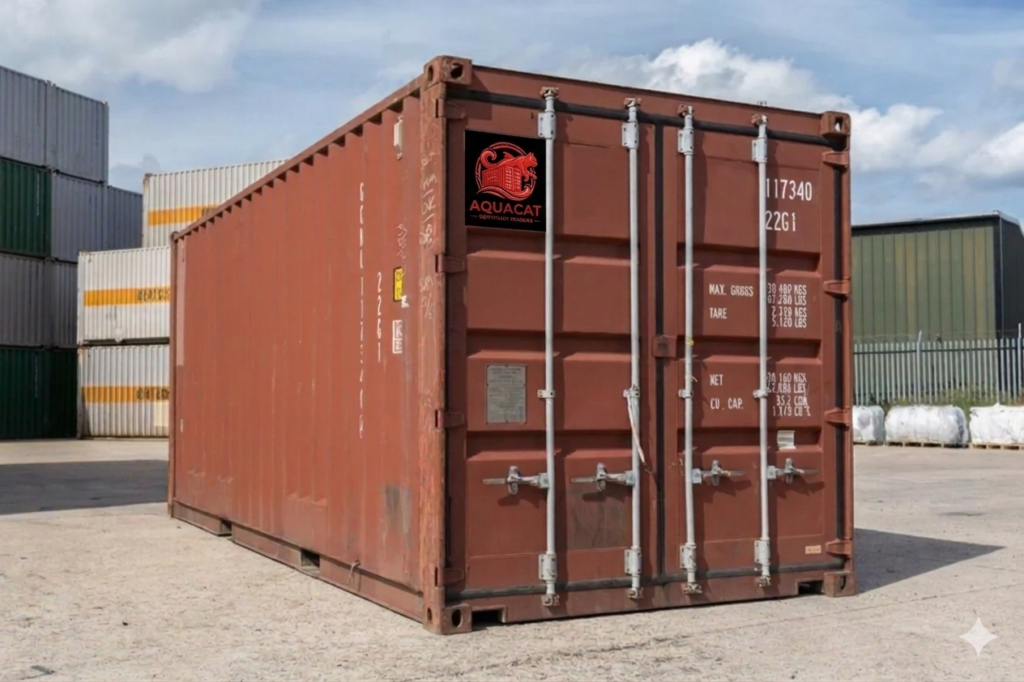
Adhering to ISO 668:2013, the 20ft container, also known as a TEU (Twenty-foot Equivalent Unit), features the following standard dimensions:
External Measurements:
- Length: 6.058 meters (19 feet 10.5 inches)
- Width: 2.438 meters (8 feet)
- Height: 2.591 meters (8 feet 6 inches)
Internal Measurements:
- Length: 5.898 meters (19 feet 4.2 inches)
- Width: 2.352 meters (7 feet 8.6 inches)
- Height: 2.393 meters (7 feet 10.1 inches)
Door Opening:
- Width: 2.340 meters (7 feet 8.1 inches)
- Height: 2.280 meters (7 feet 5.8 inches)
These precise dimensions ensure that containers fit seamlessly on ships, trucks, and trains, facilitating smooth intermodal transport within South Africa and internationally.
Weight and Volume Specifications
A standard 20ft container boasts impressive weight and volume capacities:
- Gross Weight: 24,000 kg
- Tare Weight: 2,200–2,400 kg
- Payload (Cargo Weight): Up to 21,600–21,800 kg
- Volume: Approximately 33.1 cubic meters
These specifications allow for the safe and efficient movement of a diverse range of goods, from minerals and manufactured products to agricultural exports.
Variants of the 20ft Container in South Africa
South Africa’s dynamic market utilizes several types of 20ft containers:
- Standard General Purpose: For most dry cargo.
- High Cube: Provides extra height (2.896 meters/9 feet 6 inches) for voluminous goods.
- Refrigerated (Reefer): Equipped with insulation and cooling for perishables.
- Open Top: Allows loading of over-height cargo from above.
- Side-Opening: Facilitates rapid loading/unloading.
Each variant slightly alters the internal measurements, but the external footprint remains consistent for logistical compatibility.
Common Applications of 20ft Containers in South Africa
The 20ft container’s versatility has led to its adoption across various sectors in South Africa:
- International Shipping: Used extensively in major ports like Durban, Cape Town, and Port Elizabeth for imports and exports.
- Domestic Logistics: Efficient for road and rail transport, fitting standard trailers and flatbeds.
- Storage Solutions: Secure, weatherproof storage for businesses, farms, mines, and construction sites.
- Conversions: Transformed into offices, homes, classrooms, retail outlets, and more.
Their manageable size makes 20ft containers a favorite for urban and rural projects alike.
Regulatory Compliance and Safety Standards
All containers entering South Africa for shipping must have a valid CSC (Container Safety Convention) plate, verifying structural integrity and safety. The South African Bureau of Standards (SABS) ensures that containers meet local and international regulations. For conversions, local municipalities require compliance with building codes, especially if containers are used as permanent structures.
Buying, Renting, and Leasing in South Africa
The South African market offers flexible options for acquiring 20ft containers:
- Buying: New and used containers for long-term investment.
- Leasing: Cost-effective for medium-to-long-term projects without ownership burdens.
- Renting: Ideal for temporary needs such as events or short-term storage.
Prices vary based on age, condition, and any modifications. Always inspect containers for structural soundness, water-tightness, and a valid CSC plate if intended for shipping.
Transport and Handling Considerations
Transporting a 20ft container across South Africa is straightforward due to standardized infrastructure. Containers can be moved by:
- Flatbed and skeletal trailers
- Rail wagons
- Container-handling cranes and forklifts
However, it’s important to comply with local weight restrictions and obtain necessary road permits when transporting loaded containers.
Conversion and Customization Trends in South Africa
A growing trend in South Africa is the conversion of 20ft containers into:
- Affordable Housing: Quick-to-deploy homes for urban and rural communities.
- Pop-up Stores and Cafés: Mobile retail solutions for entrepreneurs.
- Classrooms and Offices: Modular, relocatable educational and commercial spaces.
Conversions often require insulation, ventilation, electrical wiring, and plumbing. Local regulations govern such modifications, and professional contractors specializing in container conversions are recommended.
Environmental Impact and Sustainability
Repurposing shipping containers supports environmental sustainability by:
- Extending their usable lifespan
- Reducing the demand for new construction materials
- Offering recyclable steel once containers reach end-of-life
Innovative South African architects and developers are championing green building practices by integrating containers into eco-friendly projects.
Frequently Asked Questions
How many pallets fit in a 20ft container?
Usually, 10–11 standard (1.2m x 1.0m) pallets, depending on stacking and arrangement.
Are 20ft containers weatherproof?
Yes, they are designed to be wind and watertight, protecting contents from the elements.
Can I stack 20ft containers?
Absolutely. Containers are engineered for stacking, making them ideal for modular construction and efficient storage.
Do I need municipal approval for a container home?
Yes. Local councils require plans and inspections to ensure safety and code compliance.
Optimizing Space in a 20ft Container
To maximize your container’s space:
- Use uniform pallets and stack goods efficiently.
- Install shelving or racking for storage applications.
- Distribute weight evenly for transport safety.
- Consider custom modifications, such as ventilation or insulation, based on intended use.
The Role of 20ft Containers in South African Trade
South Africa’s ports handle vast quantities of 20ft containers annually, supporting the export of minerals, agricultural produce, and manufactured goods. The standard size ensures efficient handling, stacking, and compatibility with global shipping routes, cementing the 20ft container’s status as a pillar of the nation’s logistics infrastructure.
Maintenance and Durability
With proper care, a 20ft container can last over 20 years. Maintenance tips include:
- Regular inspections for rust or structural damage
- Prompt repainting and rust treatment
- Lubricating door mechanisms
- Repairing or replacing door seals as needed
Containers used for static storage or conversions may last even longer, given reduced exposure to the harsh marine environment.
Conclusion
The 20ft shipping container is an essential component of South Africa’s logistics, storage, and construction sectors. Its standardized size, robust construction, and adaptability make it a smart investment for businesses and individuals alike. Understanding the details of the 20ft container’s dimensions, capacities, and regulatory requirements empowers South Africans to make informed, cost-effective, and sustainable choices in a competitive market.
20ft container size, 20ft shipping container South Africa, standard shipping container dimensions, container conversions, ISO container South Africa, 20ft container for sale, container storage South Africa
For expert advice or to purchase a 20ft container in South Africa, consult local suppliers, logistics companies, or container conversion specialists.