
What Are the Dimensions of a 10ft Container? A Complete Guide for South Africa
Are you considering a 10ft shipping container for your storage, office, or transportation needs in South Africa? One of the first questions you might have is: what are the dimensions of a 10ft container? Understanding these dimensions is essential for planning, logistics, and ensuring the container fits your intended space or purpose.
This article provides a detailed exploration of the dimensions, specifications, uses, and advantages of a 10ft container, with specific insights for South African buyers and businesses.
Table of Contents
- Introduction to 10ft Containers
- Standard Dimensions of a 10ft Container
- Internal vs External Dimensions
- Door Opening Dimensions
- Volume and Weight Capacity
- Types of 10ft Containers
- Main Uses of 10ft Containers
- Benefits of Using 10ft Containers
- Modifications and Custom Uses
- Delivery and Placement Considerations
- Regulatory and Compliance Issues
- 10ft Container FAQs
- Conclusion
1. Introduction to 10ft Containers
Shipping containers have revolutionized the way goods are transported and stored across the world. While the 20ft and 40ft containers are the most common, the 10ft container is gaining popularity in South Africa for its compact size and versatility.
A 10ft container is essentially half the length of a standard 20ft container. Its small footprint makes it ideal for sites with limited space or applications that don’t require a full-sized container.
2. Standard Dimensions of a 10ft Container
So, what are the actual dimensions of a 10ft container?
While there might be slight variations depending on manufacturer or modifications, here are the industry-standard dimensions for a 10ft (three-metre) shipping container:
| Measurement | Metric | Imperial |
|---|---|---|
| External Length | 2.991 m | 9 ft 10.5 in |
| External Width | 2.438 m | 8 ft 0 in |
| External Height | 2.591 m | 8 ft 6 in |
| Internal Length | 2.831 m | 9 ft 3.4 in |
| Internal Width | 2.352 m | 7 ft 8.6 in |
| Internal Height | 2.393 m | 7 ft 10.3 in |
| Door Width | 2.340 m | 7 ft 8.1 in |
| Door Height | 2.280 m | 7 ft 5.8 in |
| Tare Weight | ~1,300 kg | ~2,870 lbs |
| Max Payload | ~8,600 kg | ~18,960 lbs |
| Volume Capacity | ~15.9 m³ | ~560 cu ft |
Note: “High Cube” 10ft containers are rare, but if available, they add about 30 cm (one foot) to the height.
3. Internal vs External Dimensions
It’s important to distinguish between external and internal dimensions:
- External dimensions are measured from the outside edges of the container, which is crucial for transportation, placement, and space planning.
- Internal dimensions are what you can actually use inside the container, accounting for the thickness of the container walls and doors.
For instance, if you’re placing a 10ft container next to a wall or in a tight space, use the external length, width, and height for your measurements. But if you’re calculating storage capacity or planning a container office, the internal dimensions are what matter.
4. Door Opening Dimensions
The doors of a 10ft container are typically located at one end. The door opening is slightly smaller than the internal width and height due to framing and seals.
- Door Width: ~2.340 m (7 ft 8.1 in)
- Door Height: ~2.280 m (7 ft 5.8 in)
This is important for loading large items: always check both the internal space and the door opening to ensure your goods will fit.
5. Volume and Weight Capacity
A standard 10ft container offers a usable volume of approximately 15.9 cubic metres (or about 560 cubic feet). This makes it suitable for storing the contents of a one-bedroom flat, small business stock, or tools and equipment.
Weight Capacity:
- Tare Weight: The empty container weighs about 1,300 kg.
- Maximum Gross Weight: Usually up to 10,000 kg.
- Payload Capacity: Subtracting tare from gross, you can load up to about 8,600 kg of goods.
Note: Always check the specific container’s CSC plate or manufacturer’s documentation for exact figures.
6. Types of 10ft Containers
While the standard 10ft container is a general-purpose unit, there are several variants:
- Standard Dry Van: The most common type, fully enclosed and weatherproof.
- High Cube: Offers extra internal height (approx. 2.896 m external).
- Open-Top: Has a removable tarpaulin roof for loading oversized items.
- Refrigerated (Reefer): For temperature-sensitive goods; less common in 10ft size.
- Side-Opening: Doors on the side for easier access.
- Customised Units: Offices, kiosks, ablutions, or workshops.
7. Main Uses of 10ft Containers
10ft containers are incredibly versatile, making them popular in a wide range of industries and applications in South Africa:
- Secure Storage: For tools, equipment, inventory, archives, or personal items.
- Mobile Offices: Quick to convert and perfect for construction sites or events.
- Workshops: Compact, secure, and easily relocated.
- Pop-Up Shops or Cafés: Creative entrepreneurs use containers as retail spaces.
- Site Accommodation: Sleeping quarters or ablutions for remote sites.
- Event Infrastructure: Ticket booths, bars, or exhibition stands.
- Transport of Goods: Suitable for small loads or areas with height/weight restrictions.
8. Benefits of Using 10ft Containers
Why choose a 10ft container over larger units?
- Space-Efficient: Fits into tight spaces where 20ft or 40ft containers won’t.
- Easy to Transport: Can be delivered by smaller vehicles, access narrow roads.
- Lower Cost: More affordable to rent, buy, and deliver.
- Flexible: Ideal for short-term or mobile applications.
- Secure: Heavy steel construction, lockable doors.
- Customisable: Easily modified for unique applications.
- Environmentally Friendly: Repurposed shipping containers support recycling.
9. Modifications and Custom Uses
10ft containers are a favourite for modifications because of their manageable size and flexibility. Common modifications include:
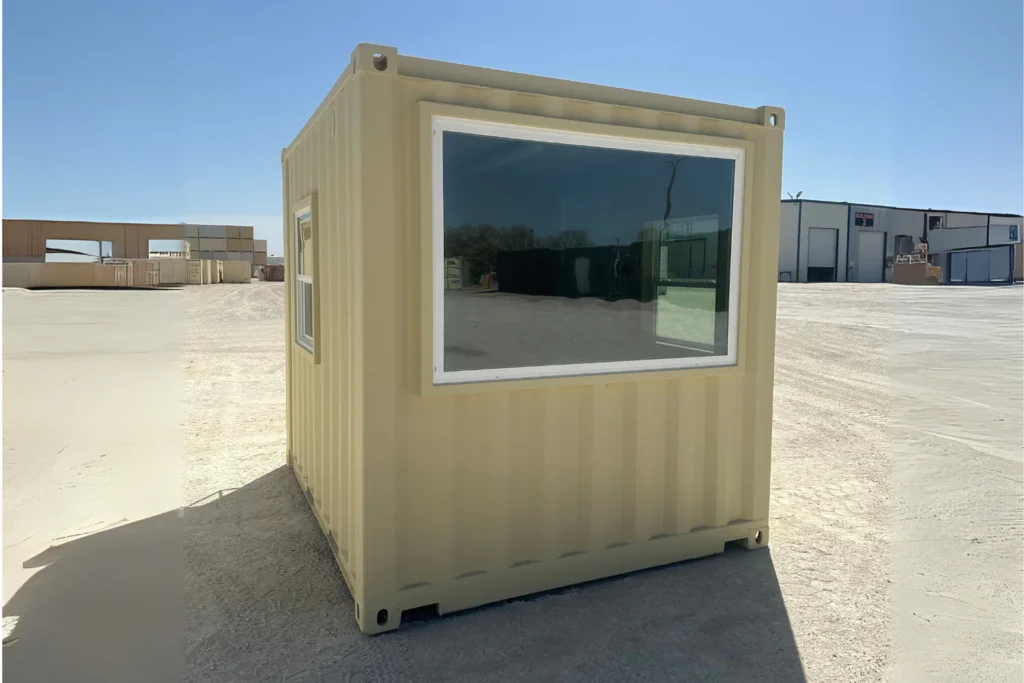
- Doors & Windows: Add side doors, roller shutters, or windows.
- Insulation: For comfortable office or accommodation use.
- Electrical & Plumbing: Lighting, sockets, air conditioning, or ablutions.
- Shelving & Racking: For organized storage.
- Branding: Painted in company colours or with signage.
- Partitions: Create multiple rooms or sections inside.
Tip: If you need a custom 10ft container in South Africa, work with a supplier like AquaCat Container Traders, who offer a range of modifications tailored to your needs.
10. Delivery and Placement Considerations
Before ordering a 10ft container, consider the following:
- Access: Is there enough space for a delivery vehicle and offloading using a crane or hiab?
- Ground Preparation: Level, firm surface is essential; concrete pads or railway sleepers are ideal.
- Permits: Check with your local municipality for any required permissions.
- Obstacles: Overhead wires, trees, or fences may restrict placement.
- Handling: 10ft containers are lighter and easier to relocate than larger units.
11. Regulatory and Compliance Issues
- CSC Certification: If you plan to use the container for shipping/export, ensure it has a valid CSC (Container Safety Convention) plate.
- Building Regulations: For permanent installations (offices, shops, accommodation), you may need planning permission or compliance with building codes.
- Health & Safety: For site use, ensure modifications meet health and safety requirements.
12. 10ft Container FAQs
Q: Can I stack 10ft containers?
A: Yes, if the container is structurally sound and has corner castings, it can be stacked. Always follow safety guidelines.
Q: Can I use a 10ft container for export shipping?
A: Only if it has a valid CSC plate and meets shipping line requirements. Not all 10ft containers are accepted for international shipping.
Q: How is a 10ft container delivered?
A: Typically by tilt-bed truck or crane truck. Ensure sufficient access and space for unloading.
Q: How much does a 10ft container cost in South Africa?
A: Prices vary based on condition (new or used), modifications, and market demand. Contact AquaCat Container Traders for current pricing.
Q: Can I rent instead of buy?
A: Yes, most suppliers offer rental options for both short- and long-term needs.
13. Conclusion
A 10ft shipping container offers a compact, flexible, and secure solution for a wide variety of needs in South Africa. Whether you need extra storage space, a mobile office, or a custom project, knowing the exact dimensions and specifications will help you plan effectively.
Key Dimensions Recap:
- External: 2.991 m (L) x 2.438 m (W) x 2.591 m (H)
- Internal: 2.831 m (L) x 2.352 m (W) x 2.393 m (H)
- Door Opening: 2.340 m (W) x 2.280 m (H)
- Approx. Payload: Up to 8,600 kg
- Volume: ~15.9 m³
For advice, sales, rentals, or custom modifications, reach out to the experts at AquaCat Container TradersOpens a new window. Their team can help you choose the perfect 10ft container for your next project—delivered anywhere in South Africa.
Contact AquaCat Container Traders
Email: info@aquacatcontainertraders.co.za
Website: https://aquacatcontainertraders.co.zaOpens a new window
Let your next project start with the right-sized container—choose a 10ft unit for smart, efficient, and secure storage or workspace solutions!
Note: The dimensions and specifications provided are general averages. Always consult your supplier for the exact measurements and features of the 10ft container you intend to purchase or rent.